
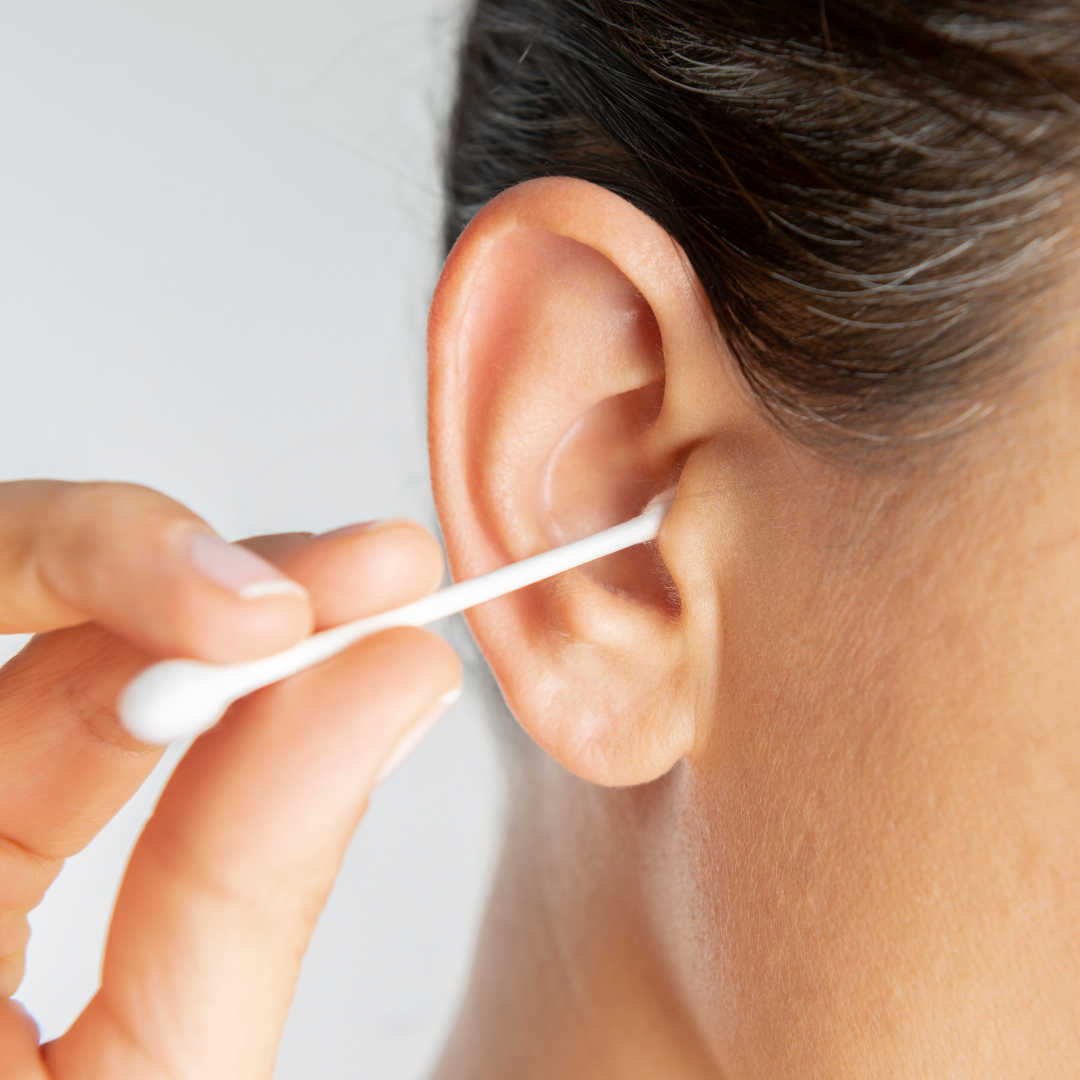
Although cotton swabs feel like accessible ear-care tools, introducing them into the canal hinders self-cleaning mechanisms and may harm your hearing. We assess whether your earwax demands professional intervention and provide customized care strategies that match your clinical profile. Routine manual hygiene is often unnecessary for ears; still, when excessive wax accumulates, we deliver safe and gentle removal solutions.
Why Cotton Swabs Create Complications Inside the Ear
Earwax, or cerumen, is not dirt. Cerumen collects particulate matter, inhibits microbial proliferation, moisturizes the epithelial lining, and shields sensitive canal tissues. Natural temporomandibular jaw motion combined with epithelial migration steadily pushes aging cerumen outward, where it naturally sheds or rinses away in the shower.
Pushing a cotton applicator past the canal opening disrupts this natural physiological transport. While you may see a tiny amount of wax on the swab, the device generally shoves the rest deeper toward the eardrum. Repeated use can pack wax into a firm blockage and create the plugged sensation that encourages even more cleaning.
Cotton swabs may be used around the folds of the outer ear, but they should not enter the canal.
Clinical Complications Associated with Q-Tip Insertion
Canal skin is thin, vascular, and highly vulnerable to mechanical abrasions. Tiny skin lacerations provoke pain and bleeding while forming entry pathways for pathogens, multiplying the chance of external ear infections. In addition, the cotton head can loosen and become retained as an obstructing foreign object in the ear.
Clinically documented swab injuries include:
- Earwax compressed tightly against canal walls
- Localized scratches, severe irritation, tissue edema, or bleeding
- Bacterial or fungal ear canal infection
- Retained cotton tips or foreign debris inside the canal
- Traumatic puncture or laceration of the eardrum
- Injury to the tiny hearing bones behind the eardrum
- Temporary or permanent hearing changes
- Ringing in the ears, balance disruption, or sharp ear pain
Although catastrophic damage remains relatively rare, unexpected arm bumps, hand slips, or excessive insertion depth easily cause acute harm.
How Often Should Earwax Get Removed?
The majority of individuals do not require routine or scheduled cerumen extraction. Functional ear canals naturally evacuate wax, and everyday washing clears away deposits on the outer ear. Excessive cleaning strips natural oils, inflames delicate canal skin, and substantially elevates the chance of infection or impaction.
Clinical clearing is warranted if cerumen occludes the auditory pathway, prevents diagnostic evaluation of the eardrum, affects a hearing aid, or sparks discomfort.
Safe Protocols for Managing Cerumen at Home
Whenever cerumen remains asymptomatic, avoiding manual intervention represents the safest course of action. Restrict hygiene to wiping the outer ear folds with a damp cloth while permitting the canal to self-evacuate.
When wax needs softening, we may recommend an over-the-counter cerumen-removal product or drops containing ingredients such as mineral oil, glycerin, saline, or carbamide peroxide. Use only the labeled amount and for the labeled duration. Discontinue the product right away if you encounter otalgia, severe dizziness, contact dermatitis, or aggravating symptoms.
Performing home ear irrigation carries distinct risks and requires prior professional evaluation and hands-on technique instructions. Absolutely avoid using high-velocity dental water jets inside your auditory canal. Avoid hazardous gadgets including ear candles, sharp metal loops, camera-assisted tools, hair clips, and home vacuum extractors. These hazardous instruments often cause cutaneous burns, sharp cuts, eardrum ruptures, or compounded cerumen impaction.
Recognizing When Earwax Requires Clinical Intervention
Schedule a professional visit if the canal remains occluded after softening treatments, cerumen appears deeply lodged, or home remedies fail. Clinical extraction is strongly recommended for patients unable to remain motionless, those with stenotic canals, hearing aid users, or individuals with surgical histories that contraindicate drops or flushing.
You should seek professional assessment for:
- Severe ear pain, intractable itching, or outer ear tenderness
- Visible blood, purulent discharge, clear fluid drainage, or offensive ear odors
- Fever or swelling around the ear
- New acoustic tinnitus sounds or unstable balance sensations
- Sudden hearing drops or auditory deficits that remain after wax removal
- Concern regarding a perforated eardrum or foreign cotton debris
- Chronic cerumen impactions that clog or disrupt hearing aids
Any rapid-onset hearing loss in one ear must be evaluated as an emergency rather than dismissed as a wax plug. Fast diagnostic testing reliably differentiates a conductive wax plug from an acute, time-sensitive sensorineural emergency.
Audiological Approaches to Excess Earwax Removal
First, we inspect the auditory canal under otoscopic or microscopic visualization to confirm wax occlusion and rule out infections, tissue trauma, or eardrum perforations. Choosing the safest clinical protocol relies on cerumen firmness, individual canal anatomy, medical records, otologic surgical history, and patient tolerance.
Available professional techniques include:
- Topical cerumenolytic drops applied prior to or during the clinical visit
- Calibrated warm-water irrigation using body-temperature fluid for intact eardrums
- Precision micro-suction under continuous microscopic visualization
- Manual instrument removal utilizing specialized curettes, loops, or micro-forceps
Direct illumination and magnification enable the provider to spare sensitive canal skin and stop promptly upon patient feedback. You may need more than one method for dry or tightly packed wax. After clearance, we conduct a follow-up visualization to ensure the canal walls and tympanic membrane show no complications. Should sensations of fullness, tinnitus, balance issues, or hearing loss persist, comprehensive diagnostic testing will isolate the true underlying etiology.
Schedule an Expert Cerumen Removal Consultation
When your ears feel plugged or you notice auditory changes, schedule an appointment with our specialists instead of grabbing a cotton swab. Your scheduled visit includes reviewing active symptoms, past ear procedures, hearing aid status, home management methods, and individual risk factors for cerumen impaction. Reach out to our audiology clinic today to schedule your professional earwax-removal visit.
